
When foreign buyers look at Rio de Janeiro, they usually begin with image.
Beach. Sun. Ocean views. But property decisions are rarely sustained by image alone. Once the first excitement passes, the real questions appear: where would daily life actually work? Which neighborhood supports family routines, healthcare, mobility, and long-term comfort?
That is where Barra da Tijuca starts to stand out in a different way.
Barra is not the part of Rio that sells itself through nostalgia. It sells itself through structure. And for many foreign buyers, that matters more than postcard charm.
Why Barra da Tijuca gets serious attention from foreign buyers
Barra tends to attract the buyer who wants more than a beautiful apartment. It attracts the buyer who wants space, predictability, and a neighborhood that feels built for modern routines.
Its wide avenues, larger residential developments, private condominiums, shopping centers, and service concentration create a different experience from the denser, older parts of Rio. For some people, that feels less romantic. For others, it feels much more livable.
That distinction matters. Foreign buyers often discover that what looks “more authentic” during a short trip is not always what feels easier to live with over months or years.
Schools are one of the biggest decision drivers
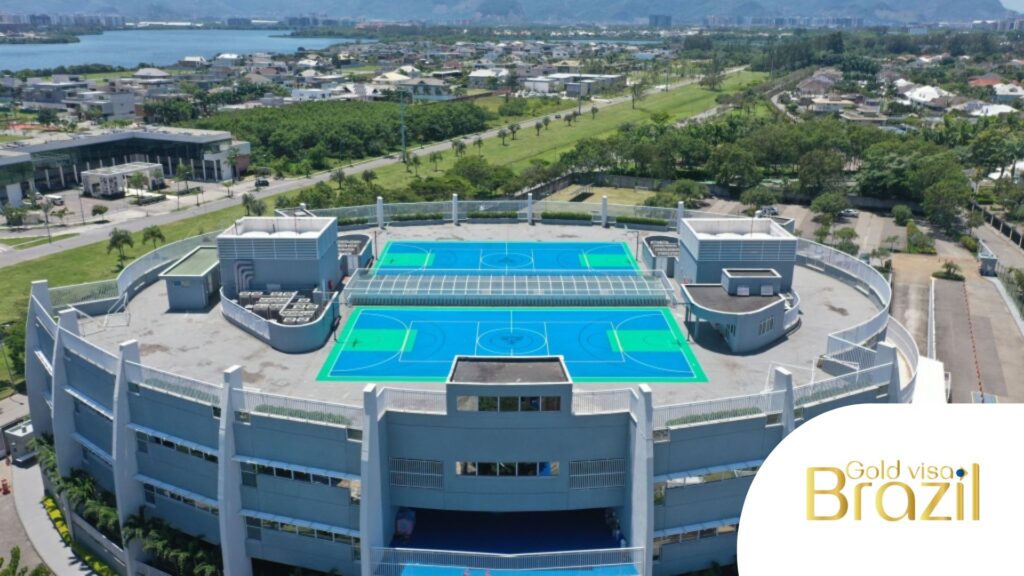
For international families, schools are not a side note. They are often one of the first filters in the property search.
Barra da Tijuca has become relevant partly because it offers educational options that feel more compatible with international transitions. The presence of institutions such as The British School (Barra), Rio International School, and the American School of Rio helps reinforce the neighborhood’s image as a place where foreign families can build continuity, not just spend a season.
That changes the way a buyer sees value. A neighborhood with strong residential stock is one thing. A neighborhood where children can adapt more smoothly is something else entirely.
In cross-border property decisions, schools are not just about education. They are about permanence.
Healthcare weighs more than many buyers expect
Most people do not begin a property search by thinking about hospitals. But when the buyer is moving with a spouse, children, or a long-term lifestyle plan, healthcare quickly becomes part of the emotional equation.
Barra da Tijuca benefits from having a strong private healthcare presence. Names like Barra D’Or, Hospital Américas, Hospital Vitória Barra, and Hospital Rio Barra reinforce the idea that the region is not dependent on distant services for everyday medical confidence.
For a foreign buyer, this matters quietly but deeply. It reduces the sense of vulnerability that often comes with adapting to a new city. It also supports the broader idea that Barra is not only a place to own property, but a place where real life can function with less friction.
Transport works in Barra — but it works in Barra’s own way
This is where honesty matters.
Barra should not be sold as if it operates like a compact, highly walkable neighborhood. It does not. Its logic is different. Movement often depends on choosing the right pocket of the neighborhood and understanding how that pocket connects to the rest of the city.
That said, Barra is far from isolated. Jardim Oceânico station, the Line 4 metro connection, and BRT access changed how many residents experience the region.
For some buyers, this gives Barra an excellent balance between local comfort and city access. For others, it means they need to be more careful about micro-location.
The mistake is to judge Barra using the wrong urban model. If someone expects Ipanema-style walkability everywhere, disappointment follows. If they want a neighborhood built around broader circulation and structured access, the picture changes.
Not every part of Barra offers the same lifestyle
One of the biggest mistakes foreign buyers make is treating Barra da Tijuca as if it were one single product.
It is not.
Some parts feel more family-oriented and residential. Some feel more vertical and urban. Some offer stronger access to transport. Others lean more into condominium life, internal amenities, and car-based convenience.
This internal variation is one of the reasons Barra can either be an excellent match or the wrong fit, depending on the buyer’s actual routine.
That is why “I want Barra” is only the beginning of the conversation. The real question is which version of Barra best fits the life the buyer intends to build.
Who Barra usually fits best
Barra tends to make the most sense for a specific kind of foreign buyer.
It works well for families with children, buyers planning extended stays, investors who value newer residential stock, and people who prioritize functionality over historical atmosphere.
It also appeals to those who are more comfortable with a lifestyle supported by larger buildings, private services, shopping infrastructure, and a certain sense of organized everyday life.
This does not make Barra better than every other part of Rio. It makes Barra better for some goals than for others.
And that is exactly how neighborhood choice should be evaluated.
The photo may sell the dream. Routine confirms the decision.
Many foreign buyers begin with the visual side of Rio. That is normal. But a purchase becomes truly intelligent when the neighborhood is judged by routine, not only by emotion.
A buyer may love the view, the beach, or the size of an apartment. But if schools, hospitals, mobility, and daily convenience do not align, the excitement fades quickly.
Barra da Tijuca performs well when the buyer understands what it really offers: not just image, but structure. Not just lifestyle branding, but a functioning residential ecosystem.
Conclusion: Barra makes sense when the buyer is choosing a life, not just a unit
Barra da Tijuca stands out because it gives foreign buyers something that is increasingly valuable in Rio: a stronger sense of daily infrastructure. Schools matter. Hospitals matter. Transport matters. And when those elements come together, the property itself starts to make more sense.
That is why Barra often appeals so strongly to international families and long-term buyers. It is not simply a beach neighborhood. In the right context, it is a neighborhood that can support a more predictable life in Rio.
Is Barra da Tijuca the Right Fit for Your Life in Rio?
If you are considering buying property in Barra da Tijuca, the smartest question is not whether the neighborhood is simply “good.” It is whether the right part of Barra matches your routine, your family profile, and your investment goals.
The Gold Visa Brazil team can help translate the neighborhood from a local name on a map into a decision that truly works for your life. And if you want more practical insights about buying in Rio, follow the blog for the next articles.